Modern man spends an average of 7 hours a day at the screens of gadgets, checks his smartphone 96 times a day and receives more than 5000 digital stimuli daily. Our brain, evolutionarily unadapted to such information load, experiences chronic stress, which manifests itself at the physiological level: cortisol rises, melatonin decreases, and the prefrontal cortex responsible for decision-making and concentration is disturbed.
What is digital addiction and its consequences?
Digital addiction is not a metaphor, but a real neurobiological condition. Receiving likes, comments or new posts releases dopamine in the brain, the same neurotransmitter that is activated by drug use.
Research from the University of California has shown that people with Internet addiction experience structural changes in the brain similar to those that occur in chemical addictions.
Physiological consequences of digital overload:
- "Technoshea" — chronic neck muscle strain from a tilted head (average head weight in tilt increases from 5 to 27 kg).
- Dry eye syndrome — decreased blink rate from 15-20 to 5 times per minute.
- Tunnel syndrome — inflammation of the median nerve from repetitive movements.
- Disruption of circadian rhythms — blue light screens suppress melatonin production by 23%.
Studies show that excessive social media use leads to symptoms of anxiety in 71% of users, depression in 68% and burnout syndrome in 45%. Meanwhile, social media activity stimulates the same areas of the brain as gaming addiction.
Neurological changes from digital overload:
- Reduced gray matter in the areas of attention and impulse control.
- Weakening of connections between the hemispheres of the brain.
- Decreased activity of the prefrontal cortex by 11-16%.
- Impaired neuroplasticity of the hippocampus (the part of the brain responsible for memory and emotions).
How does SPA help with digital detox?
SPA therapy activates the parasympathetic nervous system – a natural antidote to digital stress. Tactile stimulation during massage triggers the production of oxytocin, which blocks cortisol receptors and restores neural activity in areas damaged by digital overload.

Creating an environment free of distractions
Professional spas create a special sensory environment that “reprograms” the nervous system. Subdued lighting stimulates melatonin production, nature sounds activate the vagus nerve, and natural aromas affect the limbic system, bypassing the cortex—the area overloaded with digital information.
Neurophysiology of the spa environment:
- A temperature of 22-24°C optimizes the functioning of thermoregulatory centers.
- Humidity of 40-60% improves the functioning of the respiratory system.
- Sound frequencies of 40-60 Hz synchronize brain waves.
- Lavender aromas reduce the activity of the sympathetic nervous system by 40%.
Focus on bodily sensations and relaxation
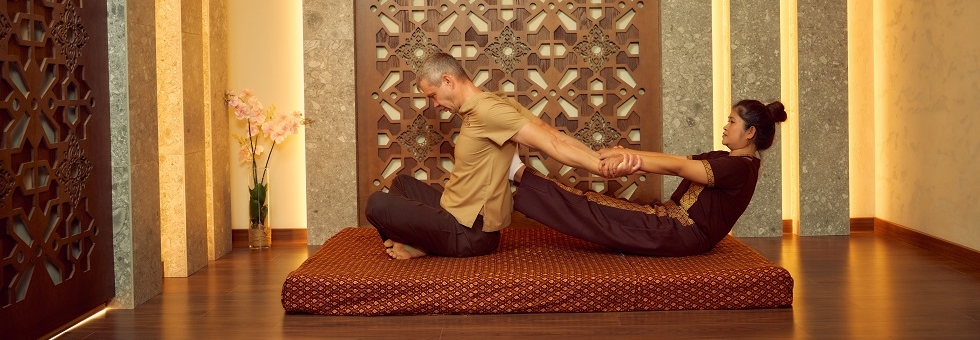
Digital technologies sever the connection between the mind and body — a phenomenon that neurophysiologists call “dissociation.” Oriental hammam and Thai massage restore this connection by activating the somatosensory cortex. Studies show that after a 60-minute massage, activity in the insular lobe of the brain (the center of bodily self-awareness) increases by 35%.
Thai massage encourages mindfulness and presence in the moment by stimulating mechanoreceptors, which transmit signals faster than pain and stress impulses. This mechanism blocks “information noise” and brings the focus back to the body.
SPA programs for digital detox
At Royal Thai Spa, we have created special SPA programs for digital detox that combine deep massage, aromatherapy, warming, and energy balance restoration.
- Thai massage with aromatic oils — deep relaxation of the neck, back, and shoulder muscles, restoration of blood flow.
- Scrub and wrap with natural ingredients — deep cleansing of the skin, removal of toxins, toning.
- Relaxation in the hammam — gentle warming of the body, restoration of thermoregulation, cleansing through the pores.
- Lymphatic massage for weight loss — stimulation of lymph flow, removal of excess fluid, reduction of swelling, and visual reduction in volume.
- Tea ceremony with lemongrass — the finishing touch for inner balance.
Scientific basis of the programs: each procedure is selected based on neurophysiological research. For example, a hammam at a temperature of 50°C activates heat receptors that stimulate the production of endorphins and block stress neuropathways. Lymphatic drainage accelerates the elimination of cortisol and inflammatory cytokines by 3-4 times.

Tips for digital detox at home
Physiological methods:
- The 20-20-20 rule: every 20 minutes, look at an object 20 feet (6 meters) away for 20 seconds.
- 4-7-8 breathing: inhale for 4 counts, hold for 7, exhale for 8 – activates the parasympathetic nervous system (the part of the nervous system responsible for rest and recovery).
- Cold shower in the morning: 30 seconds of cold water stimulates norepinephrine and increases stress resistance.
Neurochemical life hacks:
- Morning sunlight for 10-15 minutes regulates circadian rhythms.
- Limiting blue light in the evening 2 hours before bedtime increases melatonin by 58%.
- The “digital sunset” technique – gradually reducing screen brightness after 6 p.m.
Technical solutions:
- Apps to block social media at certain times.
- “Do not disturb” mode from 9 p.m. to 7 a.m.
- Charge your phone outside the bedroom.
- Use an analog alarm clock instead of a smartphone.
Benefits of digital detox for mental health
A University of Pennsylvania study involving 143 students showed that limiting social media use to 30 minutes a day for a week reduces depression by 41% and loneliness by 31%. At the same time, sleep quality improves, concentration increases, and the ability to think deeply is restored.
Neuroplastic changes during detox:
- Restoration of gray matter density in the hippocampus in 8 weeks.
- Increase in prefrontal cortex thickness by 2-5%.
- Improved connectivity between the hemispheres of the brain.
- Normalization of BDNF levels (restoration of the balance of the protein that supports the growth, survival, and functioning of neurons, improving memory, attention, and stress resistance).
Hormonal reset:
- A 23% reduction in cortisol after just 3 days of detox.
- Normalization of melatonin and a 40% improvement in deep sleep.
- Increase serotonin and dopamine levels naturally.
- Restore insulin sensitivity.
Cognitive improvements:
- Increase working memory capacity by 12-17%.
- Improve sustained attention span by 2.3 times.
- Restoration of creative thinking and insight.
- Increased emotional intelligence and empathy.
Royal Thai Spa: a space for your digital detox
Royal Thai Spa creates a unique environment for digital detox based on the principles of neuroscience and traditional Thai medicine. Our specialists are trained in digital stress management programs and have mastered techniques that specifically restore neural networks damaged by information overload.
Unique features:
- Sensory deprivation rooms with a controlled environment.
- Neuroacoustic systems for brain wave synchronization.
- Aromatherapy with scientifically selected compositions.
- Mindfulness techniques adapted for digital detox.
Clients note that after just one visit, their sleep quality improves, anxiety decreases, and their ability to concentrate is restored. Long-term programs allow you to completely reboot your nervous system and form healthy digital habits.