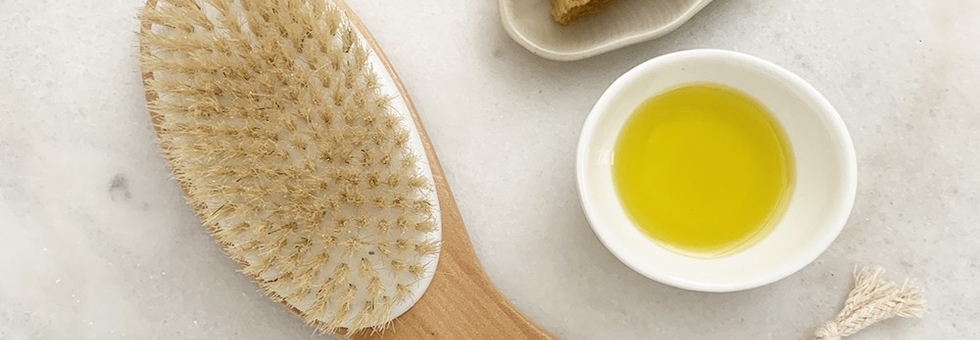
Centuries ago, the peoples of Scandinavia and Rus’ practiced dry massage as part of their traditional wellness routines. Over time, this technique was largely forgotten. It was only at the end of the 20th century that Finnish physician Paavo Airola revived this ancient practice as part of his therapeutic approach to patient care.
What Is Dry Facial Massage?
Dry facial massage is a technique performed using a special brush. Unlike many other facial massage methods, such as pinching massage, no creams or oils are used during the procedure. Dry facial massage is also commonly known as dry brushing.
The main benefits of this technique include:
- Stimulating the lymphatic system.
- Improving blood circulation and skin microcirculation.
- Helping reduce subcutaneous fat deposits.
- Improving skin firmness and elasticity.
In addition to the face, dry brushing is often performed on problem areas of the body to help reduce the appearance of cellulite. By stimulating blood circulation and increasing oxygen delivery to the skin, the technique supports the body’s natural metabolic processes.
Like other massage techniques, however, dry brushing has certain limitations. It should only be performed on healthy skin without cuts, abrasions, irritation, bruises, or other injuries. Skin conditions such as eczema, hives, and similar disorders are considered contraindications.
Indications for Dry Facial Massage
After the age of 30, the skin’s natural regeneration process gradually slows down. The skin becomes less elastic, and the first wrinkles begin to appear. Thanks to the simple dry brushing technique, it is possible to help slow these age-related changes and maintain a youthful appearance. Alternating dry brushing with top 5 facial massage techniques and practicing them regularly may further enhance the results.
Dry facial massage can be beneficial if you experience:
- Dry, flaky skin.
- Fine lines and wrinkles.
- A double chin.
- Loss of skin firmness.
- Facial puffiness.
How to Perform Dry Facial Massage Correctly
Facial skin is particularly delicate because it contains very little subcutaneous fat. For this reason, it is important to follow the correct dry brushing technique.
At home, a specially designed facial brush or a soft toothbrush may be used. To promote complete muscle relaxation, it is recommended to perform the massage while lying down. Before beginning, thoroughly cleanse the skin and remove all makeup.
Use light, gentle, interrupted strokes, following the natural massage lines of the face in the following order:
- From the center of the face toward the temples.
- From the center of the chin toward the ears.
- Diagonally across the cheeks, from the sides of the nose toward the ears.
After completing the massage, rinse your face with cool water.
If the skin becomes intensely red after the procedure, this may indicate that the brush is too firm or that there is an underlying skin or health issue.
When starting dry brushing, sessions should last no longer than 4 minutes. As your skin adapts, the duration can gradually be increased to 8 minutes. Dry facial massage should be performed no more than twice a week.